
Azelaic Acid Cream for Redness Prone Skin UK: Dermatica Claims Redness Removal, Eight Reviews Don't Show It
We earn commission from qualifying Amazon purchases. It costs you nothing and does not affect what we recommend.
Dermatica lists redness removal as a benefit in its own attribute table, then never develops the claim in a line of sales copy. In the eight reviews we could read, spots and texture improve, no one reports redness clearing, and five of the eight felt it sting.
- Three Buyers Mention Redness. What Each One Reports
- What the Listing Promises: Barrier Support, Sensitive Skin, and Redness in a Table
- Spots, Tone and Pores: Where the Five Stars Come From
- The Sting Most Reviewers Mention, and the Bullet That Says Gentle
- Every Buyer Who Had Used Skinoren or Finacea Before Scored It Lower
- How Much to Use, and What Buyers Put On After It
- A 3.9 for the Spots Buyer, and a Different Bottle for the Redness Buyer
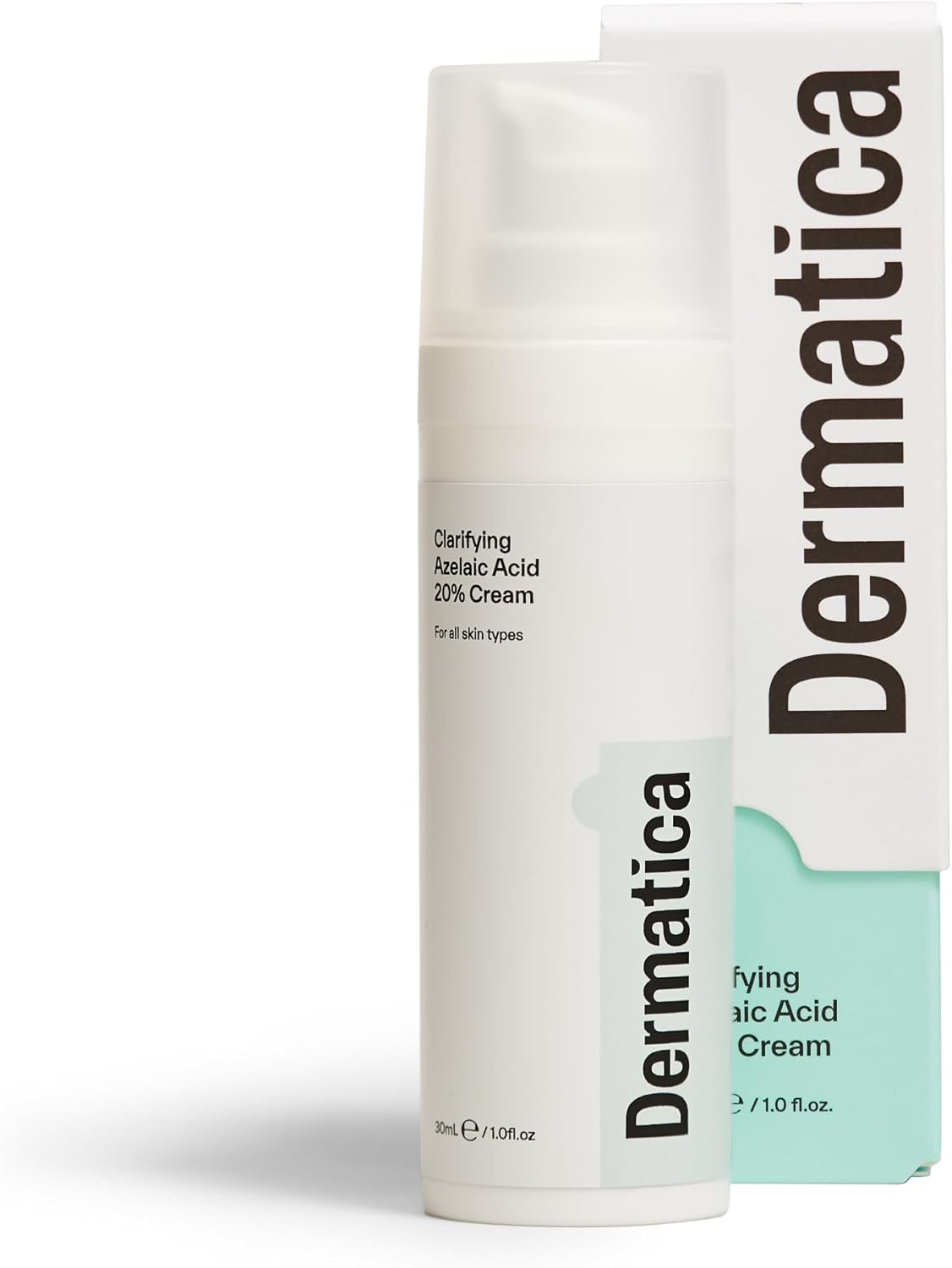
Dermatica's attribute table on the Amazon listing for its Clarifying Azelaic Acid 20% Cream lists redness removal as a benefit and redness as a recommended use. Then the sales copy drops it. Redness is not in the product title and not in any of the four bullets, which promise barrier support, sensitive-skin suitability and compatibility with other actives, and rosacea appears nowhere in Dermatica's copy or attributes. The claim is made in three rows of that table and never developed. Several of the buyers reviewing the cream are using it on the conditions that copy skips: two live with rosacea, one names broken capillaries, one hormonal acne, one freckles and uneven tone.
A word on the evidence. This review is built on the eight reviews we could recover, not the full 1,140 global ratings behind the 4.3-star badge. All eight are United Kingdom verified purchases of the 20% / 30 ml variant, dated May to August 2026, averaging just over 4.1 stars: five fives, one four, one three, one one. Eight is a small base, and one thing on the listing weighs against it: Amazon's own automatically generated summary of the full review base points towards buyers reporting redness improving. Read it there yourself, because everything below is bounded by the eight cards we could read.
The short version: the buyers who love this cream love what it did for spots, texture and pores. Not one of the eight reports redness clearing on its own, five felt it sting, and the three who had used Skinoren or Finacea before preferred what they had. If redness is your main complaint, that is what the eight cards give you, and it does not add up to the table's claim.
Three Buyers Mention Redness. What Each One Reports
Three of the eight reviews mention redness at all. They are the ones this search hinges on, so here they are one at a time.
Km, five stars, 4 May 2026, has redness from broken capillaries and says so directly: "It hasn't helped much with the redness ... from broken capillaries". The five stars are for texture and tone evening out, pores looking smaller and skin described as clear and glowing. The redness stayed, and Km adds that this was what Km expected. That matters later: broken capillaries are a different problem from a rosacea flush.
E. Keane, five stars, 16 May 2026, carries the most helpful votes in the set, 28 against 15 for the next highest, under a title calling the cream a game changer for rosacea. Three years of it, then six weeks on this cream with the odd small spot and "no flare ups at all". Read the whole review, though, and E. Keane changed everything at once: "At the same time, I changed my whole face care routine, introduced a derma cleanser, dermatica and aveeno calm and restore SPF moisturiser." Nobody, E. Keane included, can say which of the three did the work. It is a good result, not evidence that this cream alone calms rosacea. (That SPF moisturiser is not the Aveeno Calm+Restore oat gel moisturiser we reviewed, though it is the same range.)
Amazon Customer, five stars, 17 July 2026, is on a second bottle and has had rosacea with small whitehead pimples for years. The spots went within a few applications, along with the bumps. The colour faded without going: "My skin is still red (although it is much less angry) but I can live with that."
Together: spots improve, texture improves, and redness does not follow one line. Km's was unchanged, Amazon Customer's reduced but still there, E. Keane's improved inside a routine change that makes the cream's share of the credit unknowable. None of the three reports redness clearing on its own, which is why the verdict is conditional rather than a straight yes.
 Featured
15% OFF*Limited offer
One Sunday. A week of food, sorted.
23 high-protein recipes, cycle-synced for women who lift.
23 recipes · 60-page PDF · Instant download
£19.20 £16.32
See it on Etsy*Seller's discount on Etsy - may end at any time.
What the Listing Promises: Barrier Support, Sensitive Skin, and Redness in a Table
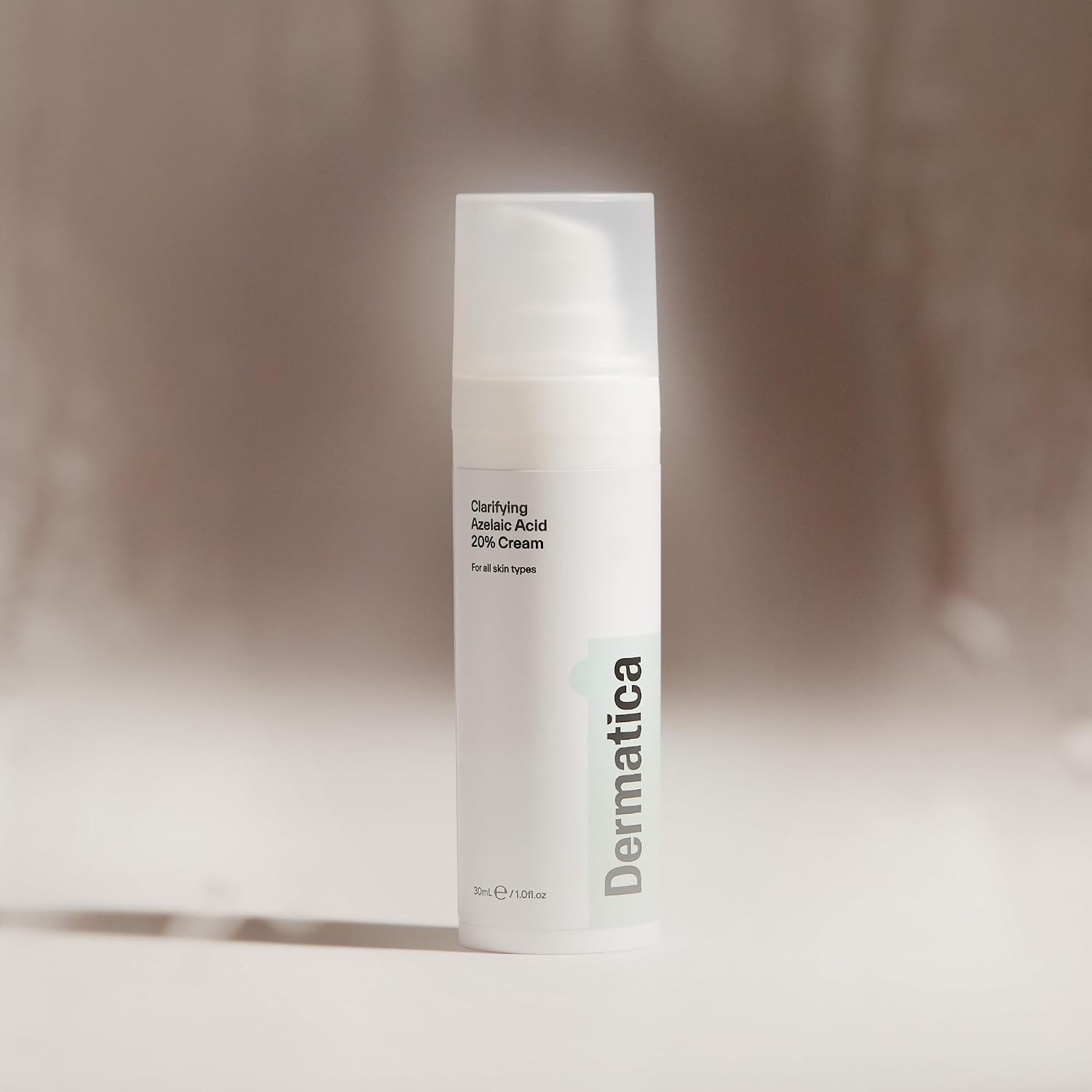
The product is a 30 ml (1.0 fl oz) white pump bottle labelled for all skin types, carrying azelaic acid at 20%. The listing title adds lightweight and fragrance free. Under Important Information there is a full ingredients list: aqua and azelaic acid first, then propanediol and squalane, with glycerin, vitamin E as tocopheryl acetate and three ceramides further down.
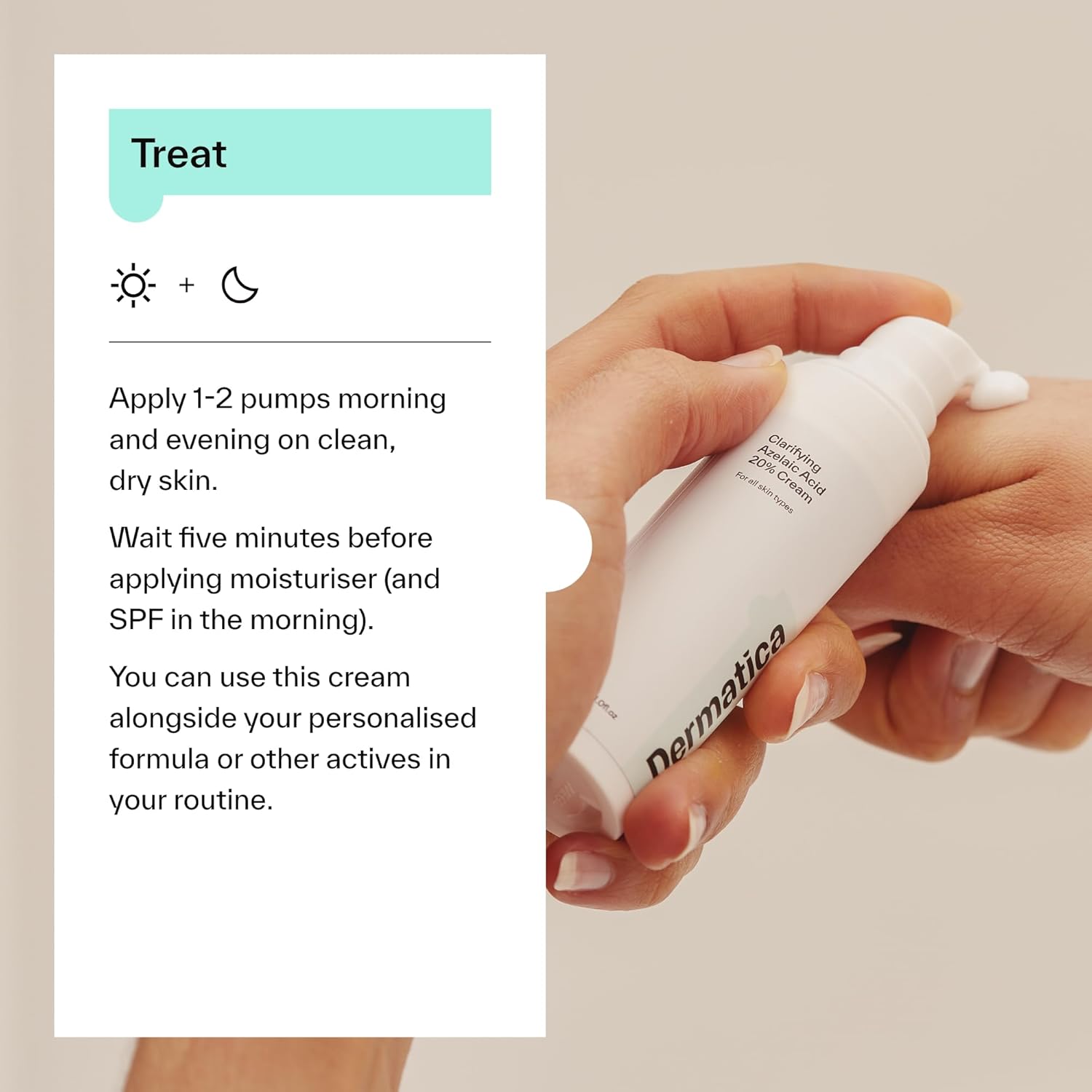
The four bullets make four claims: barrier support from glycerin, squalane and a ceramide complex; suitability for a range of skin types including sensitive skin and first-time users, on a formula "gentle enough for daily use"; compatibility with any routine, retinol, vitamin C and niacinamide included; and 1-2 pumps morning and evening, followed by one of Dermatica's own moisturisers if needed.
Redness is in none of those four bullets. Neither is rosacea, and neither, in so many words, are spots or pigmentation. Scroll to the item details table, though, and Dermatica's brand-supplied attributes say what the copy never does: benefits listed as blemishes treatment, brightening, dark spot correction, even toning, redness removal and strengthening, with specific and recommended uses both reading dark spots, redness. So the claim exists. It is three rows of a table, then abandoned; nothing else in Dermatica's own copy develops it, and rosacea appears nowhere in it. Anyone shopping for redness relief is buying on those rows and on other people's reviews. The same table gives skin type as normal, while bullet two sells the cream to sensitive skin.
The instruction panel in the listing images adds one step the bullets skip: "Wait five minutes before applying moisturiser (and SPF in the morning)." What the listing does not settle is how often to use it: the bullet and that panel say morning and evening, the brand's comparison table further down the page says 1-2 pumps in the morning.
Dermatica Clarifying Azelaic Acid 20% Cream, 30 ml
Rated by buyers for spots, bumps and uneven tone; one buyer's advice is to patch test first if your skin is reactive.
Spots, Tone and Pores: Where the Five Stars Come From
Three of the eight reviews report spots, pimples or bumps clearing, and two more report better texture or tone. Those five are the five-star reviews. Amazon Customer's whiteheads cleared within a few applications. Lotoya, five stars, 24 July 2026, is the second: "It has effectively cleared the majority of my spots", after a step up from a 15% azelaic acid. E. Keane's nose spots settled inside the six-week routine above. Mateusz is the only one of the eight to raise spots and report them not moving, and the spots Mateusz means are dark ones, pigmentation rather than pimples.
Texture and tone come up in three reviews, positively in two: Km's above and Joy's, with Mateusz's pores staying clean but not as clean as on Skinoren. Joy, five stars, 3 May 2026, bought it for freckles and uneven skin tone and reports a noticeable difference after four applications. Four uses is early, and Joy says so.
Pigmentation is where the evidence thins out. Two of the eight bought it with pigment in mind and only one names an outcome: Mateusz, four stars, 12 May 2026, who moved to this after finishing a tube of Skinoren, says "dark spots are not changing at all". Joy's noticeable difference is never broken down, and the only change Joy names is that softer, smoother feel already counted under texture, so it cannot be read as freckles fading. Anyone buying this for pigmentation is on thinner evidence than the spots buyer.
The feel is praised even by reviewers who mark it down: light and fast to absorb for E. Keane, pleasant and easy to spread for Mateusz, "hydrating and fairly effective" for aa at three stars. The feel, at least, the reviews back.
The Sting Most Reviewers Mention, and the Bullet That Says Gentle
Five of the eight reviews report stinging, burning, itching or tingling on application, the most repeated experience in the set, on a bullet promising a formula gentle enough for daily use, sensitive skin included. Amazon's summary of the wider review base flags irritation among its recurring themes too, so the five in eight here are not an artefact of which cards we were shown.
For three of the five it faded. Km's is the most precise: it stings and itches for about 15 minutes after application, and at the two-week mark that was reducing with use. Km draws a distinction worth keeping: it stings, but caused none of the visible irritation Km had from retinols. E. Keane tingled quite a bit at first and calmed down over six weeks; Joy's was a slight burning on day one and nothing since.
For the other two it did not fade, and neither was new to azelaic acid. aa, three stars, 10 August 2026, finds it "still stings and burns" despite having used azelaic acid for ages. A.N., one star, 9 May 2026, is the review anyone with reactive skin should read first: "Every application caused intense itching", resolving almost immediately on washing off, which is why A.N. suspects the formulation rather than the azelaic acid. A.N. stopped, and left one piece of advice: "If you have sensitive or reactive skin, definitely patch test first."
A.N. never calls their own skin sensitive, only leaves that advice for people who would, so the safe reading is A.N.'s: patch test first. If it is painful rather than tingling, wash it off, as A.N. did, and stop. If a mild sting is not easing by around two weeks, or your redness is worse than when you started, that is a stop signal rather than a settling-in period. And prior experience predicts nothing: Lotoya and Mateusz used azelaic acid before and mention no sting; E. Keane, aa and A.N. used it before too and felt it anyway.
There is a gentler way in, and Dermatica sells it. Two of the five-star reviewers came to the 20% from a lower strength: Lotoya "started with the 15% azelaic acid and gradually worked my way up to the 20%", and E. Keane tried "azelaic acid 10%; helped a lot but just not quite enough" first. The brand agrees: its own comparison table says "For those who already tolerate azelaic acid well, we recommend Clarifying Azelaic Acid 20% Cream", and sends very sensitive skin to the 15% instead, on the page where bullet two sells this bottle to sensitive skin. For a reactive-skinned reader that is the most useful line on the listing.
Every Buyer Who Had Used Skinoren or Finacea Before Scored It Lower
Line the eight up by star rating and a pattern falls out that the average hides. The three below five stars, at four, three and one, are the three buyers who had used Skinoren or Finacea, and all three put the other product ahead. The five-star reviews come from buyers with nothing to measure it against, or only a lower strength they used first.
Mateusz, four stars, is the mildest: dark spots are not moving, and the theory offered is texture, Skinoren's thicker formula, not wearable under makeup, sticking to the skin better. Even so, "if you didnt use azelaic acid before this will be helpful". aa, three stars, is blunter: "no where near as effective as prescription strength AA (I use finacea)". A.N., one star, bought it to replace Skinoren and found it "nowhere near as effective and was incredibly irritating".
Only aa, of the three, uses the word prescription, and we have not checked how either product is supplied in the UK, so that comparison stays the reviewers'.
How Much to Use, and What Buyers Put On After It

The listing gives two frequencies for the same cream: the bullet and the instruction panel say 1-2 pumps morning and evening, the brand's comparison table says 1-2 pumps in the morning. Both readings are Dermatica's own; if your skin is reactive, the once-a-day one is the gentler of the two. On quantity, the two buyers who mention it need the bottom of that range at most. Joy: "One squirt is more than enough to cover my face", and E. Keane needs only a very small amount. Nobody puts a number of weeks on the 30 ml bottle.
What goes on afterwards matters. Dermatica says wait five minutes, then moisturise, and add SPF in the morning. One reviewer volunteers the same unprompted: Lotoya recommends keeping the skin well moisturised and always using sunscreen, naming a La Roche-Posay SPF. E. Keane's routine ends with a combined SPF moisturiser, and an SPF moisturiser was already in the routine before this cream arrived, so read it as a habit, not a recommendation. If the order confuses you, our guide to whether sunscreen goes before or after moisturiser settles it.
On smell: the listing calls the cream fragrance free, and one of the eight, Mateusz, still finds a smell that bothers him, gone fairly quickly once moisturiser goes on. One mention cannot tell you how common it is, and fragrance free means no added fragrance, not odourless.
A 3.9 for the Spots Buyer, and a Different Bottle for the Redness Buyer
Our score is 3.9 out of 5, below both the eight-review average of just over 4.1 and the 4.3 badge from 1,140 global ratings. The working: five of the eight felt it sting on a bullet that promises gentle; the three lowest ratings belong to the three buyers who had used Skinoren or Finacea; and on redness, the attribute table claims removal while our eight show one improvement inside a whole-routine change, one reduction that left the skin red, one no change, and five reviewers who never raise it. Against that: five five-star reviews, three reports of spots clearing, two of better texture or tone. Judged as a barrier-friendly azelaic acid for spots and tone, part of what that table claims, it does well; on dark spots the one buyer who reported back saw no change. Judged on the redness line in the same table, our eight do not carry it, and the limit of this review is that we could not read the rest.
So, who buys it. If spots, bumps, uneven tone or visible pores are the complaint and redness is a side issue you can live with, the reviews support the purchase, with A.N.'s advice standing: patch test first if your skin is reactive, and expect some sting early on, since Km's was still fading at two weeks. If you would call your skin very sensitive, Dermatica's own table points you at its 15% rather than this bottle. If you are coming from Skinoren or Finacea, the three who did were the three least satisfied.
If redness itself is what you are shopping for, the Biotrade Intensive Care Cream with 20% Azelaic Acid and 6% Niacinamide is the one to look at, though it is a different bet rather than an upgrade: our eight include two rosacea buyers who both improved, one of them inside a whole-routine change, while its eight include Aleksey, one star, reporting the opposite, "This cream increased redness from my rosacea instead of decreasing it. it also stings like hell." Its title says "Redness Relief" and two bullets repeat the claim, and three of its eight recovered reviews report redness or rosacea improving: Li's "very helpful for my rosacea" and carol anne prescott's "Helped with scaring , redness", one rosacea and one the colour spots leave behind, plus Helen Hurrell, who waited a week and never says what kind. Its badge is 4.2 from 193 ratings, a thinner set than Dermatica's.
Km's broken capillaries are a different problem, and the only thing either set says about them is Km's own no change; neither mentions thread veins at all, so if that is your redness there is nothing here that supports either cream. Switching is no escape from the sting either: six of the Biotrade's eight recovered reviews mention burning, stinging, dryness or discomfort, a higher share than the five in eight here, and Jean T, who had only just started it alongside what Jean T calls a prescription azelaic gel, says "Both will sting until your skin begins to get used to it". Better aimed for a redness search, not a proven fix, and we have not tried either of them ourselves.
And if facial redness is persistent, a pharmacist or GP can help identify what is behind it, which is worth doing alongside anything you buy.
Dermatica Clarifying Azelaic Acid 20% Cream, 30 ml
Rated by buyers for spots, bumps and uneven tone; one buyer's advice is to patch test first if your skin is reactive.